Borrowed Dreams

Published at
25 Jun, 2026
Author
Gripastudio
Before we knew who we were, we learned who we were expected to become. Long before we chose our own ambitions, we inherited hopes, values, and aspirations from the people we admired most. Some became part of us. Some quietly shaped the paths we followed. And somewhere between gratitude and identity lies one of life’s most delicate questions: Which dreams were given to us—and which ones are truly our own?
The thought arrived unexpectedly.
One late afternoon over coffee, I was chatting with a client of mine.
Someone whose work I have admired for many years.
A musician. Someone whose arrangements, leadership, and ability to bring harmony from dozens of individual voices have always fascinated me.
We spoke about music. Then life. And eventually, about children.
His children had grown up surrounded by music. Not just listening to it. Living inside it.
Naturally, they became musicians too.
And so, I asked him: “Growing up with a father like you, doesn’t that create pressure?”
Not pressure in the obvious sense. But the quieter kind. The pressure of expectations. The pressure of comparison. The pressure of being seen through someone else’s achievements.
He smiled.
And somewhere during that conversation, I found myself reflecting on my own life.
The dreams I had as a child. The dreams I eventually pursued. The person I became.
And a question emerged: “How much of what we become is truly our own choosing?”
“And how much was quietly shaped by those we looked up to?”

The Dreams We Inherit
When we are young, we rarely distinguish between admiration and identity.
We see people we love. People we respect. People we want to make proud.
And without realising it, their dreams, their values, their hopes, begin to live within us.
Especially when those people are our parents.
Like most parents, we want our children to have a better life than we did.
It is one of the purest forms of love. We sacrifice. We provide. We prepare.
Not because we seek recognition. But because we hope our children will have opportunities we never had.
And when life has been kind to us, that hope often grows larger.
A successful entrepreneur hopes the business continues. A respected professional hopes the family name carries on. A parent who struggled hopes their child never has to.
None of these hopes are unreasonable. Most come from love.
But sometimes, love quietly becomes expectation.
And expectation, even when never spoken aloud, has weight.
Standing in a Long Shadow
There is a unique challenge in being the child of someone accomplished.
Not because success is a problem. But because comparison often arrives before identity.
People know your father. People know your mother. People know what they achieved.
And before you have fully discovered who you are, the world already has an idea of who you should become.
The higher the achievement, the longer the shadow. Yet what makes this complicated is that the shadow is often cast by love.
We do not carry these expectations because we are forced to.
We carry them because we want to make the people we love proud.
And perhaps that is where the tension begins.
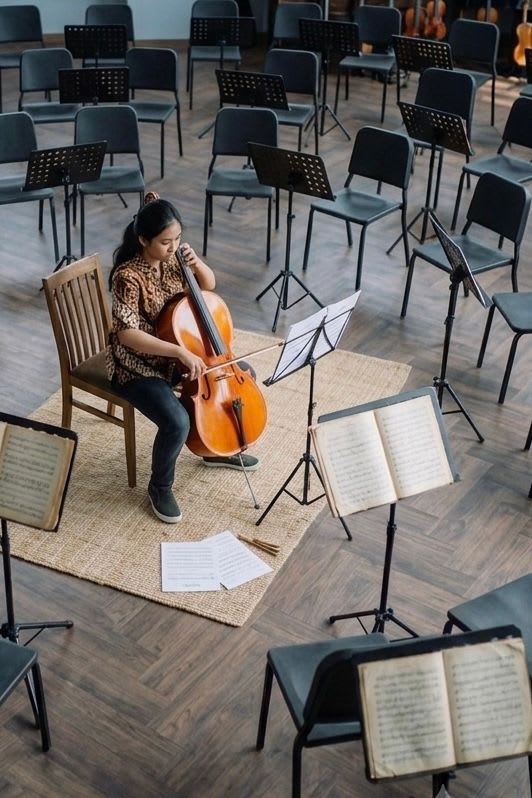
The Weight of Comparison
Perhaps, this is what makes the journey so complicated.
Because the desire to follow a parent’s footsteps does not always come from pressure.
Sometimes, it comes from admiration.
From witnessing their dedication. Their sacrifice. Their character.
From wanting, in our own way, to become someone equally worthy of respect.
And perhaps, that is what makes borrowed dreams so difficult to recognise.
Because they often arrive disguised as our own.
When people know your parents, they often begin measuring you against a version of success you did not create.
And sometimes, without realising it, children begin doing the same.
But admiration does not always lead to imitation.
People respond to it differently.
Some become determined to reach the same heights.
Some feel compelled to go even further.
And some choose an entirely different path.
Not because they lack ambition.
But because they are searching for a place that feels unmistakably their own.
Sometimes, that search can take unexpected forms.
A child may deliberately become smaller. Not smaller in potential, but smaller in visibility.
Choosing a path so different that comparison becomes impossible.
Others may find themselves speaking more about their parents’ shortcomings than their achievements.
Not because they do not love them. But because it helps create distance from a standard that feels impossible to reach.
Sometimes, what appears to be criticism is actually a quiet attempt to protect one’s own identity.
A way of saying: “I am not just someone’s son.” “I am not just someone’s daughter.” “I am my own person.”
And perhaps, beneath all these responses, lies the same human longing.
To be seen.
Not for who our parents were. Not for who others expect us to become.
But for who we genuinely are.
The challenge, then, is not becoming equal to our parents. Nor surpassing them. Nor distancing ourselves from them.
But having the courage to become ourselves.
Because life is not a competition between generations.
A child does not honor a parent by becoming a better version of them.
A child honors a parent by becoming the fullest version of who they were meant to be.
And perhaps, the energy spent proving that we are not less — or trying to prove that we are different — can be transformed into something gentler.
Curiosity. Growth. Purpose.
The quiet confidence that our worth does not depend on comparison.
Only on authenticity.
A Parent’s Dilemma
As parents, this is where wisdom is tested.
Because our role is not merely to provide opportunities.
It is also to recognise that our children are not extensions of us.
They are not unfinished chapters of our own story.
Nor are they vessels for dreams we never realised.
They are individuals.
With their own temperament. Their own gifts. Their own journey.
And perhaps, one of the more difficult lessons for parents is recognising the hidden ways children respond to our influence.
Not every child will walk toward us.
Some will walk beside us. Some will walk away.
Not because they reject us.
But because they are trying to discover where we end and where they begin.
In those moments, what they often need is not more direction.
But reassurance.
The reassurance that our love is not conditional upon resemblance.
That they do not need to become another version of us to remain worthy of our pride.
Perhaps our responsibility is not to decide their destination.
But to help them discover it.
To provide roots, without determining every branch. To offer guidance, without becoming the map.
And perhaps the greatest freedom a parent can offer is permission.
Permission to be different. Permission to choose differently. Permission to succeed by a different measure.
And most importantly, to love them enough to allow them to become someone different from us.

A Name to Carry—or Not
When my wife and I were expecting our first child, we spent many evenings discussing names.
Like many parents, we wanted to give him something meaningful.
At one point, my father-in-law offered a piece of advice I have never forgotten.
He strongly suggested that we not attach our family name to our son’s name.
At first, I was surprised.
In many families, a surname is a source of pride. A symbol of heritage. A way of carrying forward a family’s identity.
But his reasoning was different.
He said: “Let him decide one day, whether our family name, is worthy of becoming part of his brand.” “And if he chooses to build a different identity, let that be his choice too.”
The older I become, the more I appreciate the wisdom behind those words.
Because beneath them was an act of trust.
Not a rejection of legacy. But a recognition that legacy should not become a burden.
That a child should not feel obligated to spend a lifetime living under someone else’s name.
Nor should they feel compelled to spend a lifetime escaping from it.
Perhaps the greatest gift we can offer our children is not a path they must follow.
But the freedom to decide what to carry forward. And what to create for themselves.
A family name, after all, is only one form of inheritance.
There are others far more important.
Values. Integrity. Kindness. Character.
These are the things that quietly travel from one generation to the next.
And unlike a name, they do not need to be attached.
They simply need to be lived.
Final Whisper
As I left the café that evening, I found myself thinking less about music, and more about inheritance.
Not inheritance of wealth. Or business. Or reputation.
But inheritance of dreams.
The dreams we receive. The dreams we carry. The dreams we eventually question.
And perhaps, growing up is not rejecting the dreams of those before us.
Nor blindly following them.
But learning to distinguish which dreams were gifted to us, and which ones are quietly waiting to be discovered as our own.
Because the purpose of parenting is not to create miniature versions of ourselves— our own little “mini-me’s.”
But to give someone the confidence to become an original.
The greatest gift a parent can give is not a dream to follow.
But the freedom to find one.
And the greatest way a child can honor that gift is not by becoming who their parents were—
but by becoming fully, and courageously, who they are.