The Luxury of Enough
Published at
01 Jun, 2026
Author
Gripastudio
We spend much of our lives pursuing growth — bigger businesses, higher numbers, greater achievements — believing progress itself is proof that life is moving in the right direction. But somewhere along the way, many of us quietly lose the ability to recognize what is already enough. And perhaps that is why modern life feels increasingly full… yet strangely unfulfilled.
Lately, I have been thinking about growth.
Not economic growth. Not market growth.
But our personal obsession with it.
How almost everything today is measured by expansion.
More revenue. More productivity. More followers. More reach.
Even our personal lives are quietly shaped by the same expectation.
To keep moving upward.
As if standing still is failure.
As if enough is dangerous.
And perhaps that is why so many people today look successful from a distance — yet exhausted up close.
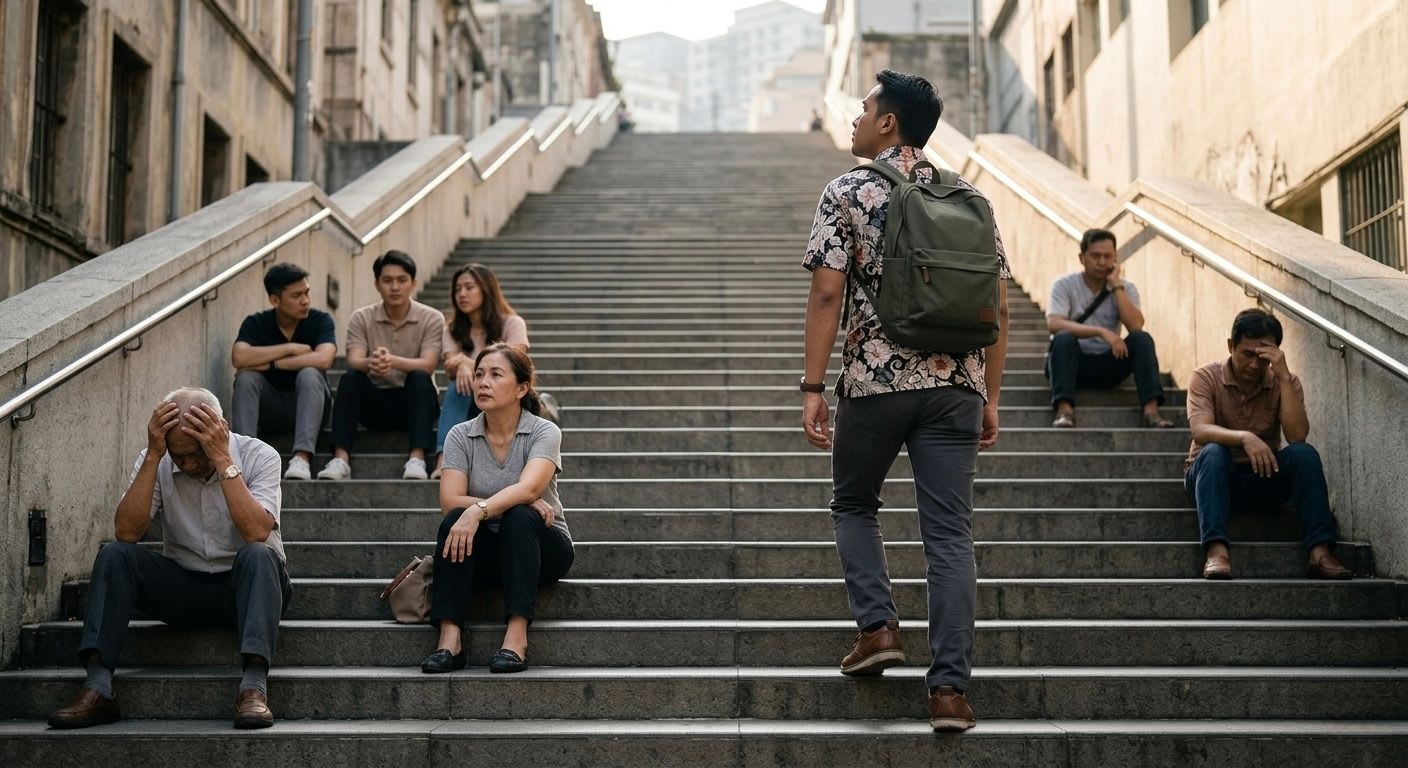
The Modern Fear of “Enough”
Somewhere along the way, we stopped asking: “What do I truly need?”
And replaced it with: “What else can I achieve?”
Growth itself became the goal.
Not because we were unhappy. But because we became uncomfortable with limits.
Enough began to feel like settling.
And perhaps, that is also why we rarely speak about “enough” while we are still chasing more.
We usually say: “This is enough.” Only after we fail to get more.
As consolation. As justification. As a way to soften disappointment.
But perhaps there is a difference between accepting less because we must — and recognising enough before excess consumes us.
And so we kept going.
Working longer. Accumulating more. Sacrificing quietly.
Sometimes at the cost of sleep. Health. Presence. Relationships.
Sometimes at the cost of life itself.
Not suddenly. But gradually.
One postponed moment at a time.
When Growth Stops Feeling Human
I have seen companies push endlessly for expansion.
Bigger targets. Higher valuation. Faster execution.
And often, the numbers looked impressive.
But beneath the growth, something else was shrinking.
Time with family. Emotional balance. Integrity.
Even joy.
Because growth, when detached from meaning, quietly turns life into maintenance.
A constant effort to sustain momentum.
And perhaps that is why many people no longer know how to rest without guilt.

The Illusion of “One More”
There is always another milestone.
Another opportunity. Another level.
And the dangerous thing is:
Sometimes we truly believe the next achievement will finally make things feel complete.
But life has a quiet way of moving the finish line.
What once felt abundant slowly becomes normal.
And what was once enough begins to feel insufficient.
Not because life changed. But because desire did.
And perhaps, the challenge was never deciding between growth and contentment.
Perhaps it was learning where one should give way to the other.
Because enough may not be a destination.
It may be a sweet spot.
The point where ambition still gives us direction, but no longer dictates our worth.
Where growth still matters, but does not quietly take away our ability to appreciate.
Because there is a curious paradox:
The more obsessed we become with having more, the less able we are to cherish what we already have.
And when appreciation disappears, even abundance can begin to feel insufficient.
A Quiet Realisation
Over time, I began noticing something different.
Some of the happiest people I’ve met were not necessarily the wealthiest.
Nor the most accomplished.
But they seemed to possess something increasingly rare:
The ability to recognise when something was already enough.
And perhaps, the ability to recognise enough before life forces us to — is its own kind of luxury.
Enough achievement to feel grateful. Enough wealth to live meaningfully. Enough success without needing to prove it constantly.
And perhaps that awareness is a form of freedom.
Because in a world that constantly tells us to want more, being at peace with enough is no longer ordinary.
It is quietly radical.
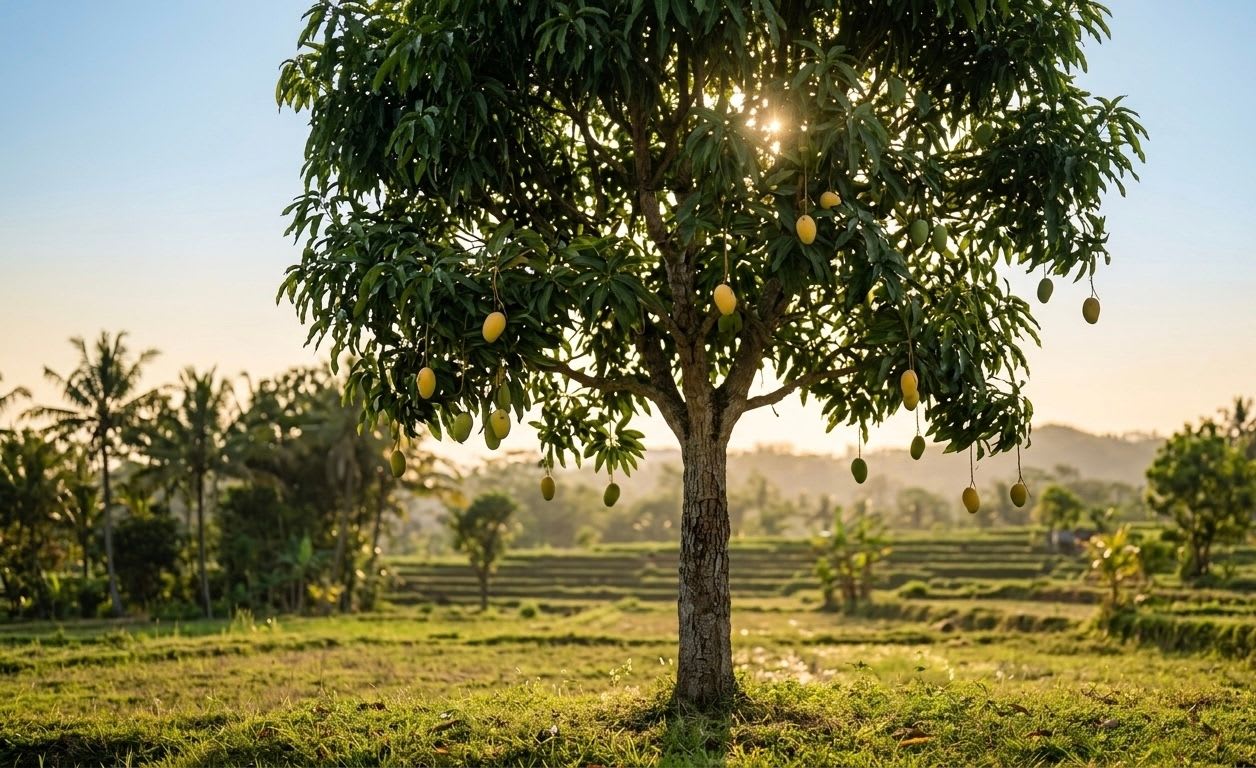
A Javanese Reflection
There is a Javanese saying: “Nrimo ing pandum.” To accept one’s portion with gratitude.
It is often misunderstood as passiveness.
But perhaps it is actually wisdom.
Not the absence of ambition. But the ability to remain grounded even while achieving.
To pursue growth without becoming consumed by it.
To understand that gratitude and ambition do not have to oppose each other.
Because there is a difference between building a better life — and endlessly trying to outrun emptiness.
There is also a quiet saying often heard in Indonesian families:
“We never truly feel enough. But even when things are not enough, if we learn to make them enough, somehow they become enough.”
Perhaps that wisdom was never really about limitation.
But perspective.
Because enough has never been absolute.
There is no universal measure for it. No fixed number. No perfect lifestyle. No benchmark that applies equally to everyone.
For some, enough means security. For others, freedom.
For some, it is a quiet home, time with family, and peace of mind.
For others, it may still include ambition, growth, and the desire to build something larger than themselves.
And perhaps that is perfectly fine.
Because the problem was never growth itself.
But the quiet fear that whatever we have may never feel sufficient.
Enough, perhaps, is not something the world defines for us.
But something we must quietly learn to recognise within ourselves.
And perhaps, part of the difficulty in feeling enough comes from where we choose to look.
If we constantly look upward — at people with more, more success, more wealth, more recognition — then enough will always feel distant.
There will always be another level. Another comparison. Another reason to feel behind.
But when we look downward from time to time — to notice those carrying heavier burdens… not with arrogance, but with awareness — we begin to realise how much we already have.
Not everyone gets to sit safely with their family. Not everyone has the luxury to dream. Not everyone has choices.
And perhaps, that is why empathy matters.
Because empathy does not only help us understand other people.
It also quietly teaches us gratitude.
And maybe, the more we learn to genuinely see others, the easier it becomes to recognise that what we already have may have been enough all along.
The Luxury We Rarely Talk About
Perhaps true luxury is not found in excess.
But in calmness.
In being able to wake up without feeling constantly behind.
In having dinner without checking notifications.
In having enough time to notice the people we love growing older beside us.
In being able to say: “This is already meaningful.”
Without feeling guilty for it.
And perhaps that kind of peace has become one of the rarest forms of wealth today.

Final Whisper
As I grow older, I no longer believe that life is asking us to endlessly become more.
Perhaps life is also asking us to notice.
To notice what we already have. What we already survived. What we already became.
Because if we never learn what enough feels like, no amount of growth will ever feel sufficient.
And perhaps, the luxury of enough is not about having less ambition.
Nor is it about settling for less than we can become.
It is about having enough awareness to recognise the sweet spot — where growth still gives us purpose, but gratitude allows us to enjoy the journey.
To know when to strive. And when to pause.
To know what is worth pursuing. And what is worth preserving.
Because perhaps the rarest luxury of all is not having more.
But knowing, deep within ourselves, when life is already full.